Fruške Therme – How technical precision and long-term planning shape international spa projects
17 June, 2026International spa architecture: a balance of trust, technology and long-term quality
Nowadays, modern spa facilities are no longer built solely on the basis of spectacular architecture or short-term investment decisions. Instead, the focus is on long-term operational reliability, technical quality and economic sustainability. It was precisely these factors that shaped the collaboration between Berndorf Bäderbau and Fruske Therme in Serbia.
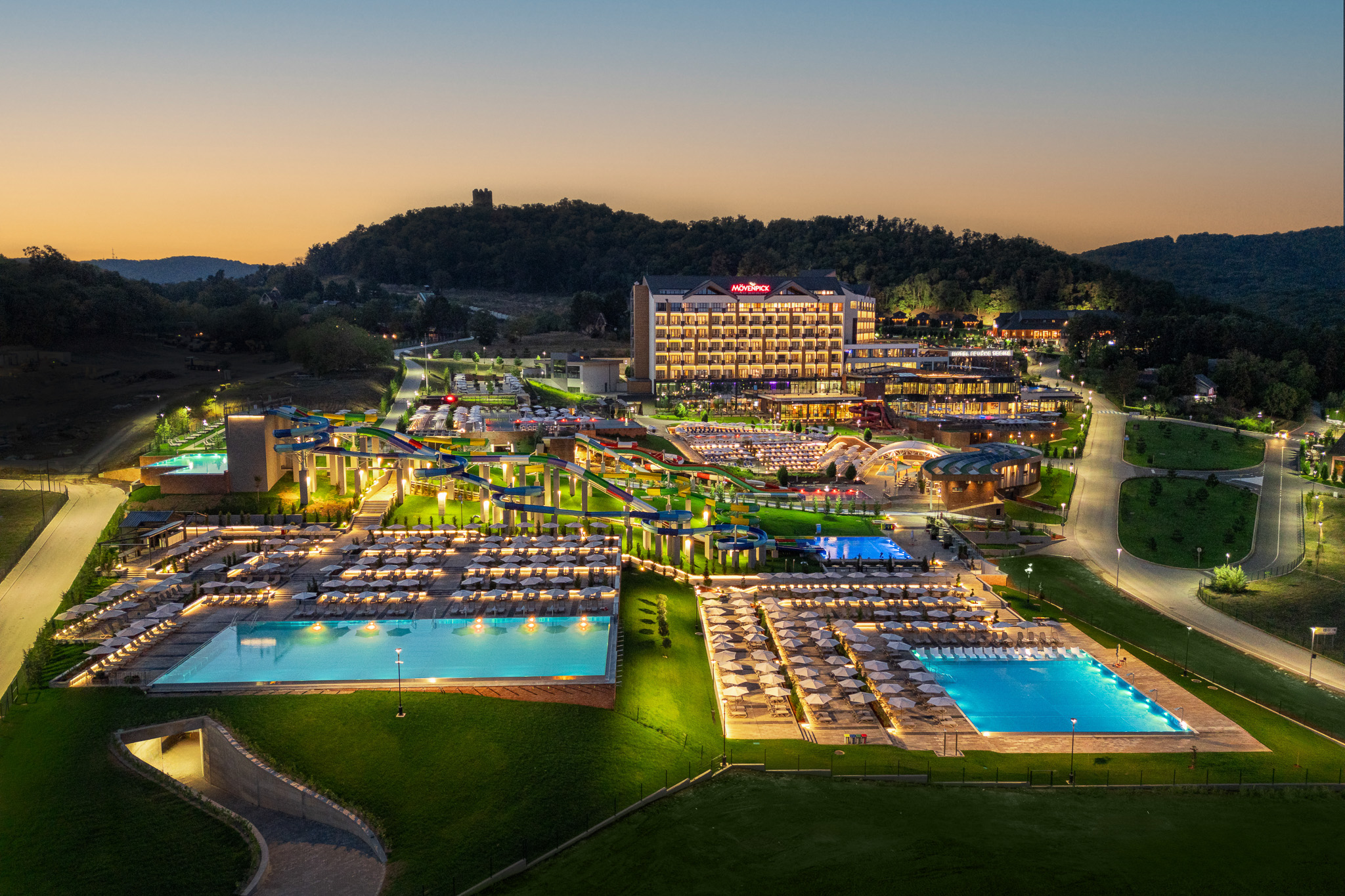
Over several years, Fru?ke Therme gradually developed into one of the most significant thermal and wellness facilities in South-Eastern Europe. This did not involve the traditional construction phases of a single project, but rather numerous new extensions, additional aquatic areas and further independent projects, which were implemented on an ongoing basis. In total, around 15 stainless steel pools were created, with a total water surface area of more than 4,000 m².
Particularly noteworthy is the long-term collaboration between the operator and Berndorf Bäderbau. Despite cheaper competitors, the operator consistently chose to work with the Austrian stainless steel pool specialist. The decisive factors were not merely the technical quality or the execution of the facilities, but above all trust, reliability and the joint development of economically viable solutions.
Trust as the foundation of international projects
This collaboration began with a delegation from Serbia visiting Austria to explore reference projects and potential project partners. Even during the initial discussions, it became clear just how crucial personal relationships and mutual respect are in the international project business.
The guests were given an insight into ongoing projects, technical solutions and production processes. At the same time, an open professional exchange on architecture, construction and the possibilities offered by modern stainless steel pools developed right from the start.
Particularly in international projects, it is often decided very early on whether initial discussions can lead to long-term partnerships. The operator felt taken seriously, technically understood and professionally supported. As a result, an initial meeting developed into a collaboration that has yielded a steady stream of new projects over the years.
To this day, this relationship is evident not only in further expansions of the facility but also in the personal interactions between the parties. The collaboration has evolved far beyond a traditional client-contractor relationship into a long-term partnership.
Smart planning rather than unnecessary complexity
It became clear from the outset that the requirements would go far beyond those of conventional pool structures. In addition to architectural quality, the focus was primarily on cost-effectiveness, short construction times and long-term operational reliability.
Working together with architects, planners and the operator, the projects were therefore not only developed from a design perspective, but also continuously optimized from a technical and economic standpoint. It became very clear that intelligent planning often does not lie in the most spectacular special solutions, but in the ability to sensibly combine technology, architecture and future operational requirements.
Over the course of the projects, designs were therefore specifically simplified and optimized. For the first construction phase, predominantly round pool shapes were chosen. To enhance cost-effectiveness, rectangular pool shapes were preferred for the subsequent construction phases. These pool shapes allowed for a high degree of prefabrication and significantly reduced production and installation times. At the same time, construction phases could be costed more economically and implemented much more efficiently under considerable time pressure.
It was precisely this technical clarity that became a key factor in the success of the entire project development.
 Pál Tamás
Hydraulic precision as part of the overall experience
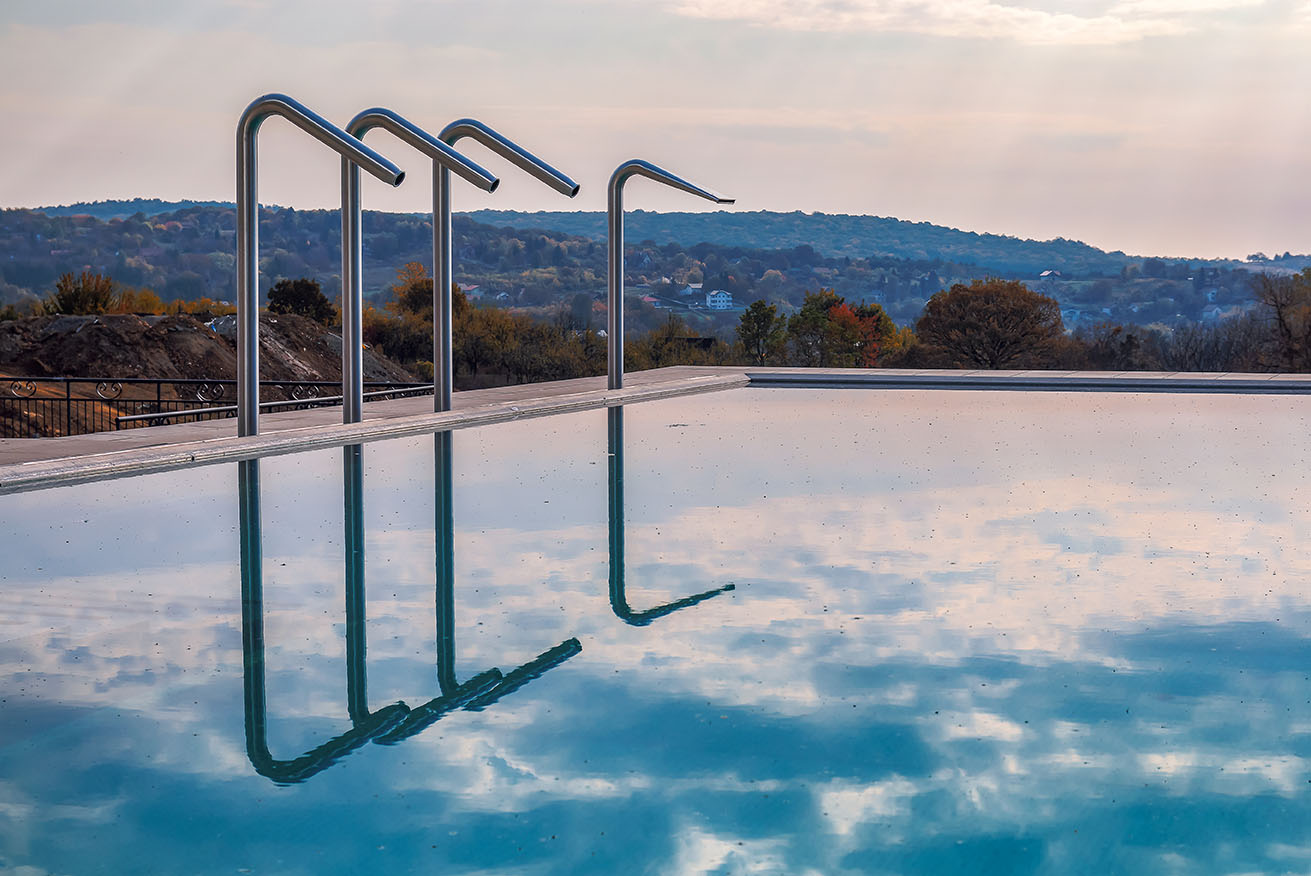
The hydraulics employed also played a key role in this. Flow-optimised inflow systems were used, which differ significantly from traditional floor inflow channels.
Thanks to specially developed inflow nozzles, the number of channels could be reduced and the spacing between the inflow elements significantly increased. The nozzles generate a combination of vertical and horizontal flow, thereby ensuring a more uniform and efficient water movement within the pool.
The chosen solution not only reduces the technical complexity but also simplifies installation, maintenance and long-term operation. This results in long-term economic benefits, particularly for large spa facilities with high visitor numbers.
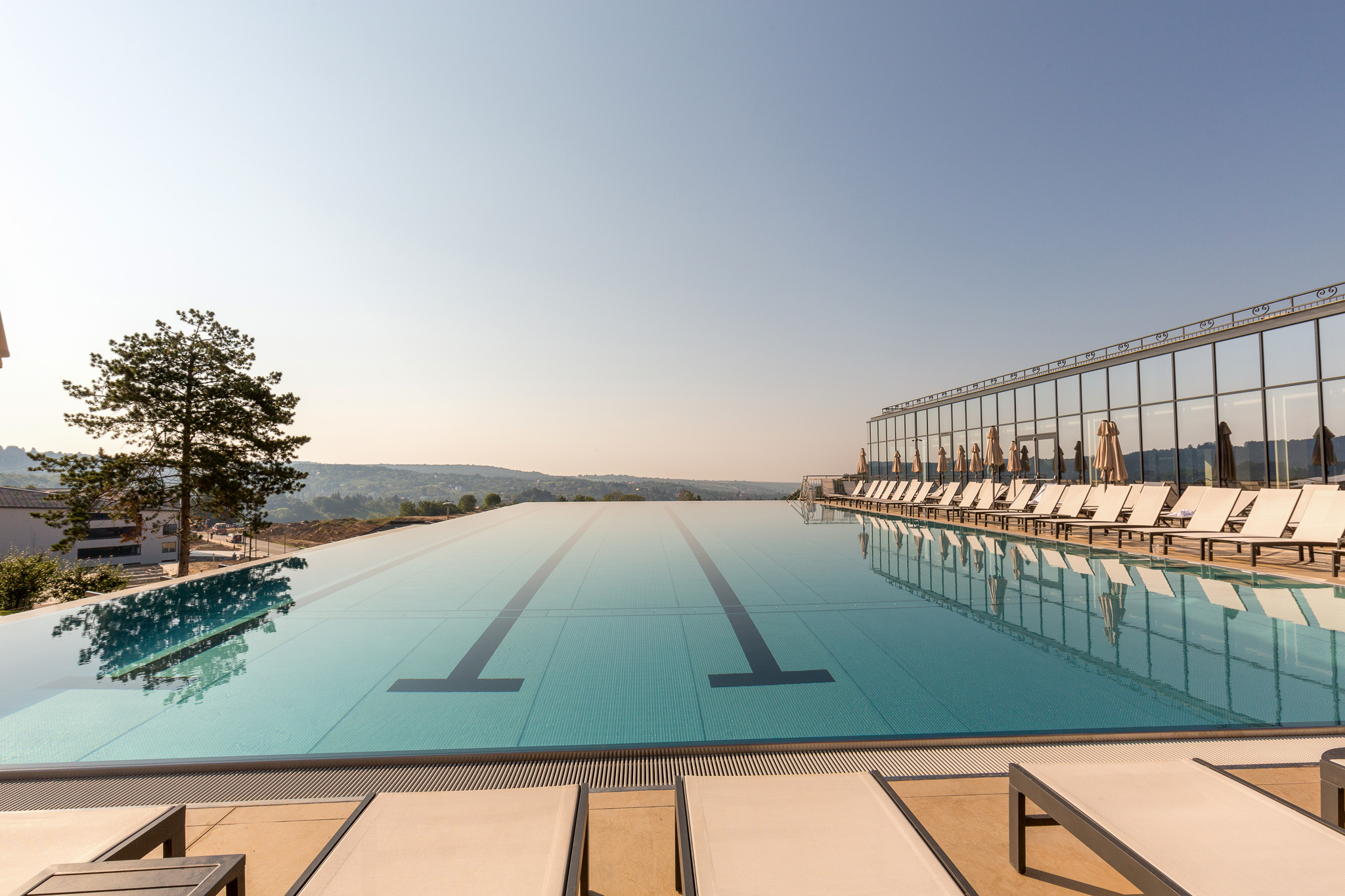
At the same time, the technical quality has a direct impact on the subsequent user experience. Calm water surfaces, precise transitions and uniform water movement are now key features of the high-quality appearance of modern spa architecture.
Furthermore, optimal pool hydraulics such as these make a significant contribution to meeting the required hygiene standards.
Fruske Therme
Stainless steel and thermal mineral water in perfect harmony
The choice of materials also played a key role at the Fruske Therme. Before the project began, the thermal mineral water was thoroughly analysed to ensure long-term material compatibility. The analysis revealed no critical issues, meaning that the tried-and-tested 1.4404 stainless steel grade could be used.
In thermal applications in particular, stainless steel impresses not only with its high durability and hygienic properties, but also with its clean and timeless aesthetic. The smooth surfaces facilitate easy cleaning, reduce deposits and contribute to high operational reliability in the long term.
Furthermore, stainless steel significantly shapes the architectural impact of modern aquatic environments. The precise craftsmanship, the calm water lines and the clean design language create a high-quality atmosphere that integrates harmoniously into the overall architecture of the facility.
 Edvard Nalbantjan
International project management under tight deadlines
The implementation phase in particular highlighted just how demanding large-scale international projects can be. The greatest challenges arose not so much from the technical design itself, but rather from tight schedules, international logistics and complex customs procedures.
At times, several installation teams worked in parallel on site in order to meet the ambitious deadlines. Only Berndorf’s own teams were deployed, supported by the Czech subsidiary.
It was precisely under this intense time pressure that the importance of well-established processes, clear communication and many years of project experience became apparent. At the same time, the project management remained transparent and traceable for the operator at all times. Material consumption, actual working hours and changes were communicated openly and reconciled on an ongoing basis, enabling the projects to be implemented almost entirely within the planned budget.
Long-term support as a key added value
However, just as important as the technical implementation itself was the long-term support provided after the project was completed. Even years later, Berndorf Bäderbau continues to assist the operator with maintenance, technical queries, upkeep issues and organisational matters relating to the facilities.
This long-term support is becoming an increasingly crucial factor, particularly in international spa projects. Operators need partners who remain available and take responsibility even after the handover.
The Fruske Therme thus impressively demonstrates how modern spa projects are created today: through technical expertise, intelligent planning and long-term trust.
For the true quality of a facility is rarely evident at the opening. It often only becomes apparent years later – in day-to-day operations, in the maintenance requirements and in how reliably a water park functions over the long term.
Conclusion
The Fruske Therme is a striking example of how successful spa projects require far more than just high-quality architecture or impressive aquatic attractions. What is crucial is the ability to integrate technology, cost-effectiveness, operational safety and long-term collaboration into a coherent overall concept.
It is particularly clear to planners, architects and operators just how important it is to collaborate with experienced specialist partners at an early stage. Many challenges that arise later do not originate on the construction site, but are already present in the planning stage. Technical decisions often influence construction time, maintenance requirements, operating costs and the long-term quality of a facility for decades to come.
The Fruske Therme also demonstrates that cost-effective solutions do not necessarily lie in the lowest purchase price. Rather, sustainable projects emerge where intelligent planning, technical precision and long-term partnerships come together.
After all, high-quality aquatic facilities prove their worth not on the day of opening, but many years later – in ongoing operation, in the reliability of the systems and in the long-term satisfaction of operators and guests.